
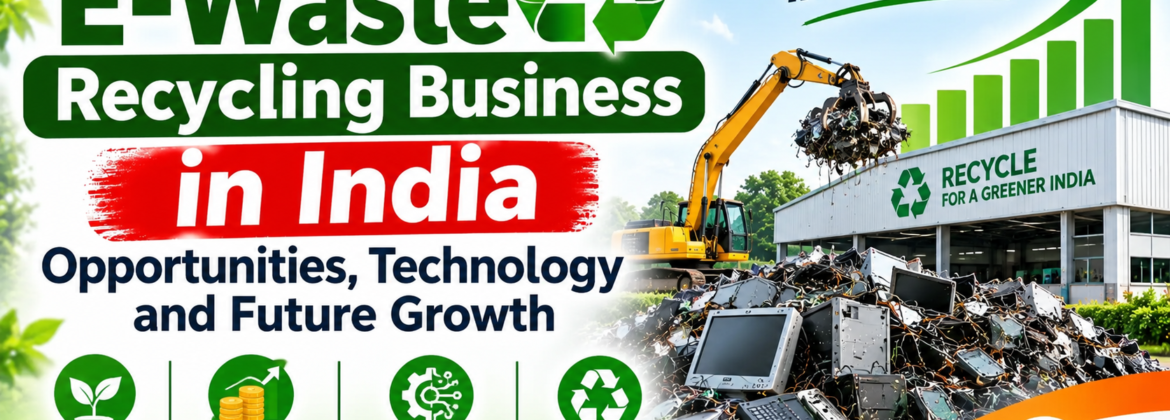
India’s electronics market continues to expand across consumer devices, business technology, telecommunications and industrial equipment. As electronic products reach the end of their useful life, the need to collect, refurbish and recycle them responsibly becomes more important. E-waste is not merely discarded equipment: it can contain reusable components and recoverable materials. With formal regulation and growing attention to resource efficiency, e-waste recycling is becoming an important part of India’s circular-economy ecosystem.
What Is E-Waste Recycling?
E-waste recycling is the organised collection, sorting, dismantling and processing of discarded electrical and electronic equipment to recover materials and manage residues safely. Common waste streams include computers, laptops, mobile phones, printers, televisions, servers, networking equipment and household appliances.
Different products contain different materials and require different processing methods. Some equipment may be suitable for repair or refurbishment before recycling. Hazardous components and residues must be handled through appropriate systems.
Why Is E-Waste Recycling Important for India?
Responsible recycling can reduce unsafe disposal, recover useful resources and support more efficient use of materials. It can also create activity across collection, logistics, refurbishment, dismantling, processing and material recovery.
Formal recycling is particularly important because unsafe dismantling or informal processing can expose workers and the environment to hazardous substances. Authorised facilities are expected to operate within applicable environmental and safety requirements.
Which Materials Can Be Recovered?
Depending on the product and process, e-waste may contain copper, aluminium, iron, steel, plastics and small quantities of precious or specialty metals. These materials may be recovered and supplied into appropriate downstream markets.
The actual composition and commercial recovery potential vary widely. Not every electronic product contains economically recoverable quantities of gold, silver or other precious metals. A feasibility study should use representative feedstock testing rather than generic recovery assumptions.
How Does an E-Waste Recycling Plant Work?
Collection and receipt: A facility obtains electronic waste through appropriate suppliers, bulk generators or collection channels and records the incoming material.
Sorting and inspection: Items are classified by type, condition and material composition. Equipment suitable for reuse may be separated for refurbishment.
Dismantling: Trained workers or suitable equipment separate components such as circuit boards, cables, batteries, plastics and metal parts.
Mechanical processing: Depending on the waste stream, operations may include shredding, size reduction, magnetic separation and other mechanical techniques.
Material recovery: Further processes recover selected materials. The technology must be appropriate for the feedstock and supported by the necessary permissions and pollution-control measures.
Residue management: Hazardous and non-recoverable residues are stored, transported and treated or disposed of through authorised channels.
Government Regulations and EPR
The E-Waste (Management) Rules, 2022 establish registration and EPR-related obligations for specified stakeholders. The CPCB E-Waste EPR Portal supports the relevant digital processes.
Eligible registered recyclers may generate EPR certificates based on compliant recycling activity under the applicable rules and procedures. A business should not assume that registration alone guarantees certificate revenue or that every waste stream qualifies.
What Makes an E-Waste Recycling Business Viable?
Reliable feedstock: A consistent and legally sourced supply of suitable electronic waste is essential for plant utilisation.
Technology selection: Equipment and processes should match the target waste streams, recovery goals and environmental requirements.
Approvals and compliance: The business must identify and obtain the registrations, consents and authorisations applicable to its location and activity.
Operational expertise: Skilled staff, worker protection, maintenance and quality control are essential.
Recovery economics: Revenue depends on material composition, recovery rates, processing costs and market prices.
Downstream buyers: The business needs dependable buyers for recovered materials and authorised routes for residues.
Opportunities Across the Value Chain
Collection and reverse logistics can connect households and organisations with formal recyclers. Refurbishment can extend product life and preserve the value of usable equipment. Dismantling and processing can separate materials for recovery, while technology providers can develop safer and more efficient solutions.
Battery recycling is a related opportunity, but waste batteries are governed by a separate regulatory framework in India, including the Battery Waste Management Rules, 2022. Businesses should identify the correct rules for each waste stream.
Challenges Facing the Industry
Key challenges include high capital requirements, securing reliable feedstock, competition from informal channels, fluctuating commodity prices, technology selection, environmental compliance and the need for specialised skills.
Before investing, entrepreneurs should prepare a detailed feasibility study with conservative assumptions for plant utilisation, recovery rates, input prices, output prices, working capital and compliance costs.
The Future of E-Waste Recycling in India
Greater digital adoption will keep end-of-life electronics management in focus. Stronger monitoring of the EPR framework may increase the importance of genuine processing capacity and traceable records. Advances in sorting and material recovery may also improve the economics of selected waste streams.
Long-term growth will depend on effective collection systems, responsible investment, skilled operators, stable downstream markets and consistent implementation of environmental rules.
Conclusion
E-waste recycling can contribute to resource recovery, environmental protection and India’s circular-economy ambitions. It also offers business opportunities across collection, refurbishment, dismantling, technology and material recovery.
However, commercial success is not automatic. A viable operation needs reliable feedstock, appropriate technology, regulatory compliance, safe residue management and realistic financial planning. Businesses that build these fundamentals can play a meaningful role in India’s evolving recycling ecosystem
Editorial note: This article is for general information and educational purposes. Regulations, portal procedures and government programmes may change. Verify the latest official notifications before relying on any compliance or financial information.

Leave a Comment