

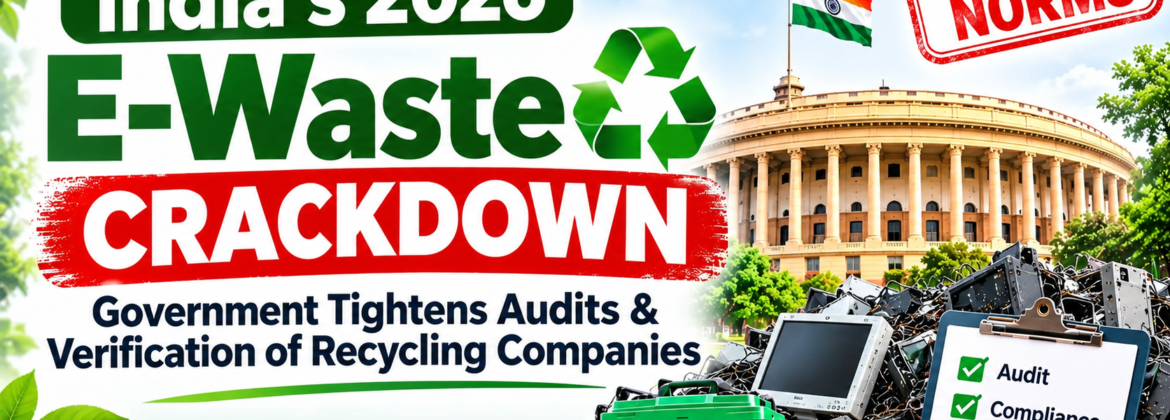
India’s electronic-waste recycling sector is moving into a more closely monitored phase. The E-Waste (Management) Rules, 2022 created a formal system built around registration, Extended Producer Responsibility (EPR) and digital reporting. The effectiveness of that system, however, depends on whether reported recycling activity reflects real processing. Recent regulatory measures and audit-related directions in 2026 underline the importance of physical verification, reliable records and transparent compliance.
Why Is E-Waste Monitoring Becoming More Important?
Under the EPR framework, eligible producers meet their obligations through the mechanism prescribed by the rules, including the use of eligible certificates generated by registered recyclers. The credibility of this system depends on accurate data about waste received, processed and recovered.
If reported quantities do not match actual processing, the environmental purpose of the rules is undermined. Authorities therefore use registration checks, reporting systems, inspections and audits to strengthen oversight.
CPCB and State-Level Recycler Audits
Government communications in 2026 described steps to strengthen audits and verification of registered recyclers. CPCB has developed digital support for audit-related processes, and State Pollution Control Boards and Pollution Control Committees have roles in implementation under the applicable directions.
An audit may examine whether a facility’s registered capacity, machinery, input material, processing records, recovered output and other supporting information are consistent. The scope and procedure of any inspection depend on the relevant direction and applicable law.
What May Be Checked During an Audit?
Depending on the applicable audit process, checks may include registration and consent documents, physical infrastructure, installed machinery, waste receipt records, inventory, processing logs, material recovery data, sales records and residue management.
Facilities should be able to explain how reported quantities were measured and how the information is supported by source documents. Accurate record keeping is an operational requirement, not merely an administrative formality.
GST-Linked Documentation and Traceability
CPCB’s e-waste portal has published directions and notices concerning GST-linked invoice documentation in the EPR certificate process. Such documentation can help improve the traceability of transactions and provide another source against which reported activity may be checked.
Businesses should consult the latest CPCB direction and portal instructions to understand the precise documentation required. They should not assume that every invoice or transaction is automatically sufficient for certificate generation.
Possible Consequences of Non-Compliance
The E-Waste (Management) Rules, 2022 and the wider environmental law framework provide for action where stakeholders fail to meet applicable requirements. Depending on the facts and legal provisions involved, consequences may include directions, environmental compensation or action affecting registration.
Companies should obtain advice from qualified compliance professionals where they receive a notice, audit observation or regulatory direction. This article is general information and is not legal advice.
What Does This Mean for Genuine Recyclers?
Facilities with real processing capacity, suitable technology, environmental safeguards and reliable records may be better placed to demonstrate compliance. A stronger verification system can also help distinguish responsible operators from businesses whose reported activity is not adequately supported.
Recyclers should review their registrations, consents, plant capacity, input-output records, GST documentation, EPR portal submissions and procedures for handling residues. Any gaps should be addressed before they become regulatory issues.
The Wider Impact on India’s Recycling Ecosystem
Better verification can support trust in the EPR certificate system and encourage investment in genuine recycling infrastructure. It may also increase the importance of formal collection networks, transparent material flows and professional environmental management.
Regulation alone cannot solve the e-waste challenge. Consumers, bulk waste generators, producers, collection partners and recyclers all have roles in ensuring that electronic waste reaches suitable facilities.
Conclusion
The 2026 compliance focus highlights a shift from registration alone towards stronger verification of actual recycling activity. CPCB systems, state-level audits and invoice documentation are intended to improve transparency and accountability.
For recycling businesses, the practical message is to maintain genuine processing operations, accurate records and current approvals. For producers and consumers, using the formal system helps support responsible e-waste management.
Frequently Asked Questions
Why are e-waste recyclers being audited in India?
Audits help authorities verify that reported recycling activity, facility capacity and supporting records are consistent with actual operations and applicable requirements.
What is checked in an e-waste recycler audit?
Checks may include registrations, plant and machinery, waste receipt records, processing data, recovered materials, invoices and residue management, depending on the audit direction.
Why are GST invoices relevant to e-waste recycling?
GST-linked documentation can improve transaction traceability and support verification in the EPR certificate process. The current CPCB instructions determine the exact requirements.
Can a recycler lose its registration for non-compliance?
Regulatory action may be available under applicable rules and directions. The outcome depends on the facts, the violation and the legal process.
Official References and Further Reading
Use these official sources to verify current rules, notifications, portal instructions and scheme eligibility before publication.
Editorial note: This article is for general information and educational purposes. Regulations, portal procedures and government programmes may change. Verify the latest official notifications before relying on any compliance or financial information.