

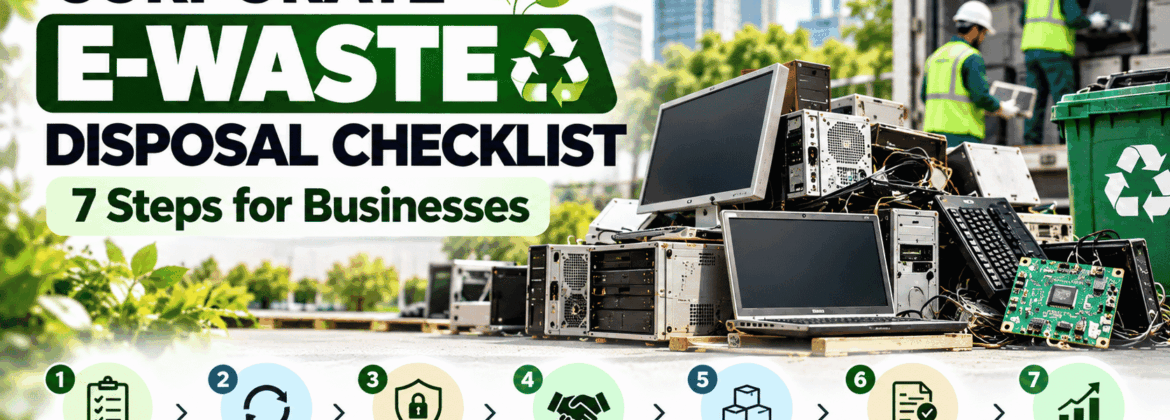
Corporate E-Waste Disposal Checklist: 7 Steps for Businesses
Computers, laptops, printers, servers and networking equipment are essential to modern business operations. But what happens when these devices become outdated, damaged or no longer useful? For organisations across India, corporate e-waste disposal should be a planned process that considers data security, responsible recycling, documentation and applicable regulatory requirements.
Simply storing old electronics in a warehouse or handing them to an unverified scrap dealer can create avoidable risks. A documented disposal process helps businesses identify obsolete equipment, protect sensitive information, select an appropriate recycling route and maintain records of the handover.
This corporate e-waste disposal checklist explains seven practical steps your organisation can follow to manage electronic waste more responsibly.
What Is Corporate E-Waste Disposal?
Corporate e-waste disposal is the process of identifying, assessing, collecting and directing obsolete or discarded electrical and electronic equipment from a business to an appropriate reuse, refurbishment or recycling channel.
The process may involve IT departments, administration teams, procurement, information security, finance and sustainability personnel. The appropriate route depends on the equipment’s condition, data-security needs, applicable regulations and the capabilities of the receiving service provider.
Why Is a Structured E-Waste Disposal Process Important?
- Data protection: Retired devices may contain business records, credentials, customer information or other sensitive data.
- Better asset management: A documented inventory helps teams track obsolete equipment and its final destination.
- Responsible resource recovery: Suitable recycling processes can recover useful materials from discarded electronics.
- Traceability: Collection records and handover documents make the disposal process easier to review.
- Regulatory awareness: Businesses can identify which requirements apply to their role and activities instead of assuming every organisation has identical obligations.
Corporate E-Waste Disposal Checklist: 7 Essential Steps
Step 1: Identify and inventory obsolete electronic equipment
Begin by checking offices, IT rooms, server rooms, warehouses and storage areas for electronic equipment that is no longer required. Create an inventory before arranging collection.
Record useful details such as:
- Equipment category and quantity
- Asset tag or serial number, where appropriate
- Department or storage location
- Condition and intended disposition
- Whether the equipment contains storage media or sensitive information
A clear inventory helps your organisation estimate the scope of disposal and prepare the information required by the receiving provider.
Step 2: Decide whether equipment can be reused or must be recycled
Not every old device needs to become waste immediately. Assess whether equipment can be redeployed internally, repaired, refurbished or otherwise reused in accordance with your organisation’s policies.
Items that are no longer suitable for reuse should be directed through an appropriate recycling or disposal route. Do not transfer usable assets or regulated waste without following the organisation’s asset-management and applicable legal procedures.
Step 3: Protect business data before handover
Computers, laptops, servers, hard drives and other storage devices may retain confidential information even after they are no longer in use. Data security should therefore be addressed before equipment leaves your premises.
Establish a process to:
- Identify all devices that store data.
- Back up information that must be retained.
- Remove accounts, access credentials and device-management links where appropriate.
- Use an approved data-sanitisation method suited to the device and risk level.
- Arrange physical destruction where required by policy or risk assessment.
- Retain suitable evidence of the completed process.
Deleting files or performing a standard factory reset may not provide the level of assurance required for every business. Select the method according to the sensitivity of the data, the storage technology and your security requirements.
Step 4: Select an appropriate e-waste recycling partner
Choose a service provider whose capabilities match your equipment categories and disposal requirements. Verify the provider’s identity, relevant registration or authorisation where applicable, accepted materials, collection arrangements and downstream handling process.
Before confirming a handover, ask:
- Which types of electronic equipment are accepted?
- What registrations or authorisations apply to the proposed activity?
- How are materials collected, weighed and documented?
- What happens to the equipment after collection?
- Can the provider supply the relevant handover or recycling records?
- Is data destruction available if it is required?
Do not rely only on a verbal assurance. Confirm the relevant details and documents before releasing business assets.
Step 5: Segregate and store equipment safely
Keep equipment designated for disposal in an identified, access-controlled area until collection. Separate material categories where required and prevent unauthorised removal or mixing with general waste.
Pay particular attention to damaged batteries and components that may require special handling. Follow applicable storage and safety procedures, and confirm any additional handling instructions with the receiving provider.
Step 6: Arrange collection and maintain documentation
Agree on the collection date, location, equipment categories, estimated quantities and handover procedure. Assign an employee to supervise the transfer and reconcile the items against the inventory.
Depending on the transaction and applicable requirements, retain records such as:
- Approved asset-disposal list
- Collection or handover receipt
- Quantity or weight details
- Invoice or service documentation, where applicable
- Data-sanitisation or destruction evidence, where required
- Relevant recycling documentation and correspondence
Keep records in a central location so authorised teams can retrieve them for internal reviews, audits or reporting where applicable.
Step 7: Review the process and assign responsibility
Make e-waste disposal part of your organisation’s regular asset-management process rather than a one-time cleanup activity. Define who identifies obsolete equipment, who approves disposal, who handles data security and who verifies the final handover.
Review the process periodically, update internal instructions when requirements change and evaluate whether collection records are complete. A clear procedure can make future disposals more consistent and easier to manage.
What Should Businesses Know About E-Waste Rules in India?
India’s E-Waste (Management) Rules, 2022, as amended, establish requirements for specified entities and activities involving electrical and electronic equipment. The regulatory framework includes Extended Producer Responsibility (EPR) and registration requirements for relevant categories of entities.
Obligations depend on the organisation’s role. For example, a business disposing of its own retired office computers should not automatically assume that it has the same EPR obligations as a producer. Producers, manufacturers, recyclers and refurbishers should assess the requirements that apply to their specific activities.
Businesses should consult current official guidance from the Central Pollution Control Board (CPCB) and the CPCB E-Waste EPR Portal before making compliance decisions.
This checklist is general information, not legal advice. Where the organisation’s role or obligations are unclear, seek advice from an appropriately qualified compliance professional.
How RPlanet Can Help Businesses Plan E-Waste Disposal
RPlanet Integrated Solutions Pvt. Ltd. works in the e-waste recycling and resource-recovery sector. Businesses planning to dispose of obsolete electronic equipment can contact RPlanet to discuss their requirements, the categories and quantities of equipment involved, and the collection and documentation arrangements available.
Before proceeding, confirm service availability for your location and material categories, the relevant authorisations and the proposed recycling route.
Planning to dispose of obsolete business electronics? Visit RPlanet’s website to make an enquiry about your requirements.
Frequently Asked Questions
1. How should a company dispose of old computers in India?
Inventory the computers, assess reuse options, protect stored data, choose an appropriate recycling channel and maintain handover records. Verify the receiving provider’s relevant registration or authorisation where applicable.
2. Why is data destruction important before e-waste disposal?
Retired devices may retain confidential business or personal information. Appropriate data sanitisation or physical destruction can reduce the risk of unauthorised access, depending on the device and the organisation’s security requirements.
3. What documents should a company keep after e-waste collection?
Depending on the transaction, records may include an approved asset list, handover receipt, quantity or weight details, relevant invoices, data-destruction evidence and recycling documentation.
4. Does every business need EPR registration for e-waste?
No. Requirements depend on the organisation’s role and the applicable rules. Businesses should consult current CPCB guidance to determine which registration, EPR or other obligations apply to their activities.
5. Can electronic equipment be reused instead of recycled?
Potentially, yes. Equipment that remains suitable may be considered for internal redeployment, repair or refurbishment, subject to company policy, data-security controls and applicable requirements. Equipment that cannot be reused should be directed to an appropriate route.
6. How often should a company arrange e-waste collection?
There is no single schedule suitable for every organisation. Collection frequency depends on the volume of obsolete equipment, storage capacity, operational needs and applicable requirements. Establish a documented schedule that suits your business.
7. How can a business enquire about e-waste disposal through RPlanet?
Visit www.rplanet.in to enquire. Confirm the service area, accepted equipment categories, collection arrangements and documentation before scheduling a handover.
Conclusion
Responsible corporate e-waste disposal starts well before collection day. By identifying obsolete equipment, protecting business data, selecting an appropriate recycling partner and maintaining clear records, organisations can establish a more structured and traceable process.
Use this seven-step checklist to review your current procedure, assign internal responsibilities and prepare your next equipment-disposal cycle. A consistent approach can support better asset management, information security and responsible resource recovery.

Leave a Comment