

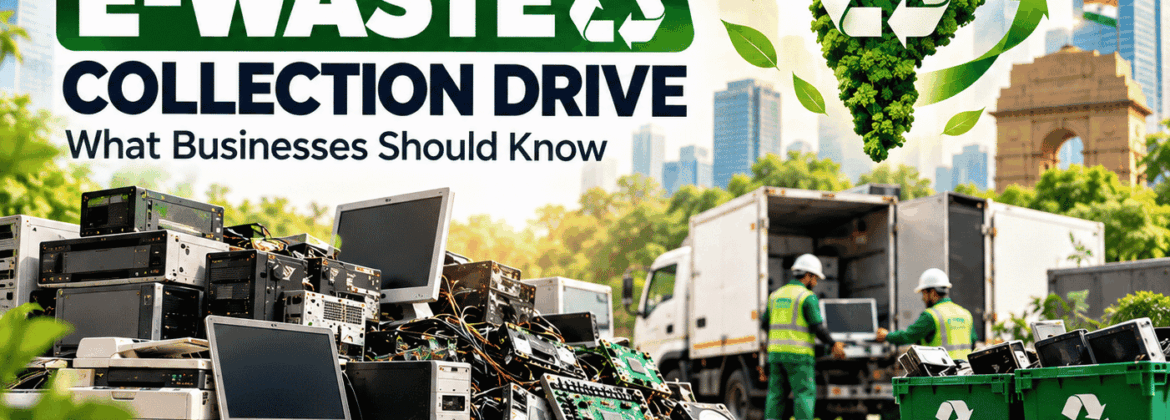
India’s October 2026 E-Waste Collection Drive: What Businesses Should Know
Electronic waste is becoming an important sustainability and resource-management concern for businesses across India. Offices, factories, IT companies, educational institutions and commercial establishments regularly replace computers, printers, networking equipment and other electronic devices. When these items reach the end of their useful life, responsible collection and recycling become essential.
In October 2026, the Government of India is highlighting responsible e-waste collection and disposal through Special Campaign 6.0. The campaign runs from 2 October to 31 October 2026, with an emphasis on effective collection, segregation and scientific disposal of e-waste in government offices.
For businesses, this is a timely opportunity to review existing e-waste disposal practices, identify unused electronic equipment and establish a documented process for responsible recycling.
What Is the October 2026 E-Waste Collection Drive?
The Ministry of Mines announced a month-long e-waste collection drive from 2 October to 31 October 2026 as part of its Swachhata Hi Seva initiatives. Separately, the Government’s Special Campaign 6.0 places emphasis on effective collection, segregation and disposal of e-waste across participating government offices.
The initiatives aim to encourage responsible disposal, improve awareness and support the recovery of useful materials from discarded electronics. They also highlight the importance of treating e-waste as a resource rather than simply as unwanted material.
Important: These announcements do not mean that every private business can use a government collection point. Companies should confirm the eligibility, location and operating arrangements of any specific collection drive before handing over equipment.
Why Should Businesses Pay Attention to E-Waste Collection?
Businesses generate electronic waste whenever equipment becomes obsolete, damaged or unsuitable for further use. If these items remain in storage without a clear disposal plan, they can create operational, data-security and environmental-management challenges.
1. Improve electronic waste management
A documented collection and disposal process helps organisations identify obsolete equipment, separate it from reusable assets and direct waste to appropriate recycling channels.
2. Protect sensitive business information
Computers, servers, laptops, storage drives and other electronic devices may contain confidential company information or personal data. Before equipment is transferred, businesses should assess data risks and arrange suitable data sanitisation or physical destruction where required.
3. Support resource recovery
Electronic products contain materials that may be recovered through appropriate recycling processes. Responsible recycling can help return useful materials to the supply chain and reduce reliance on newly extracted resources.
4. Strengthen internal sustainability practices
A structured e-waste process can support environmental initiatives, internal audits, procurement policies and sustainability reporting. Businesses should retain accurate records of equipment transfers and recycling documentation.
Which Electronic Items Should Businesses Review?
Organisations can begin by identifying electronic equipment that is broken, outdated, redundant or no longer required.
- Desktop computers, laptops and computer accessories
- Servers, networking devices, routers and switches
- Printers, scanners and office electronics
- Mobile phones, tablets and communication equipment
- Televisions, monitors and display devices
- Eligible electrical and electronic equipment covered by applicable e-waste rules
Not every discarded item follows the same regulatory or recycling route. Batteries, lamps, cables and other components may require separate assessment under the applicable rules. Businesses should confirm the appropriate handling route before collection.
Corporate E-Waste Disposal Checklist: 7 Practical Steps
Step 1: Conduct an equipment inventory
Prepare a list of obsolete or unused electronic assets. Record the equipment type, quantity, location, asset identification number and condition wherever possible.
Step 2: Separate reusable assets from waste
Determine whether an item can be redeployed, repaired, refurbished or must be directed for recycling. Do not classify equipment as waste until its status has been reviewed internally.
Step 3: Review data-security requirements
Identify devices that contain sensitive information. Arrange approved data sanitisation or destruction procedures and maintain the required evidence in line with company policy.
Step 4: Choose an appropriate collection and recycling channel
Verify the service provider’s identity, registration or authorisation where applicable, accepted equipment categories and operational capabilities. Confirm that the proposed route is appropriate for the material being transferred.
Step 5: Plan safe segregation and storage
Keep collected equipment in a designated area, protect it from damage and prevent informal removal. Follow appropriate handling and storage requirements for batteries and other components that may present additional risks.
Step 6: Arrange collection and maintain records
Confirm the pickup date, material categories, quantities, transport arrangements and receiving party. Maintain relevant handover records, invoices, weight details and recycling documentation as applicable.
Step 7: Review the process regularly
Set a recurring review for IT asset disposal and e-waste collection. Assign an internal owner and document the steps employees should follow when equipment reaches the end of its useful life.
What Do India’s E-Waste Rules Mean for Businesses?
India’s E-Waste (Management) Rules, 2022 establish a regulatory framework that includes Extended Producer Responsibility (EPR) and obligations for specified entities. The precise requirements depend on an organisation’s role and the applicable provisions.
Producers covered by the rules have EPR obligations, while manufacturers, producers, recyclers and refurbishers have registration requirements under the applicable framework. Bulk consumers also have responsibilities for handing over e-waste through appropriate channels.
Businesses should not assume that every organisation has the same registration, reporting or certificate-related obligations. Producers should review their EPR requirements, while organisations disposing of their own equipment should focus on the obligations relevant to their activities and the proper handover of e-waste.
For current regulatory information, consult the CPCB E-Waste EPR Portal and the official guidance published by the Central Pollution Control Board (CPCB).
How Can Businesses Prepare for E-Waste Collection?
Before scheduling a collection, appoint a responsible internal contact, estimate the quantity and categories of equipment, identify any data-bearing devices and confirm the receiving provider’s requirements.
Ask for written confirmation of accepted materials, collection logistics, weighing procedures, applicable documentation and the intended recycling route. Where regulatory compliance is relevant, confirm that the parties involved are appropriately registered or authorised for their respective activities.
These steps can help businesses build a more organised, traceable and responsible electronic waste management process.
How RPlanet Can Support Responsible E-Waste Management
RPlanet Integrated Solutions Pvt. Ltd. works in the e-waste recycling and resource-recovery sector. Businesses evaluating an e-waste disposal programme can contact RPlanet to discuss their requirements, the types and quantities of equipment involved, collection arrangements and applicable documentation.
Before proceeding, confirm service availability for your location and material categories, along with the relevant authorisation and recycling arrangements.
Planning an e-waste disposal programme for your organisation? Visit RPlanet’s website to enquire about your requirements.
Frequently Asked Questions
1. When is India’s October 2026 e-waste collection drive taking place?
The Ministry of Mines announced its collection drive for 2 October to 31 October 2026. Special Campaign 6.0 also focuses on effective collection, segregation and disposal of e-waste in participating government offices.
2. Can private companies participate in the government collection drive?
Participation depends on the arrangements and eligibility of the specific collection point or initiative. Private companies should confirm the details with the relevant organiser rather than assume that all collection locations accept commercial e-waste.
3. Which electronic items can businesses send for recycling?
Potential items include obsolete computers, laptops, servers, printers, networking devices and other eligible electrical and electronic equipment. Acceptance depends on the receiving provider and applicable requirements.
4. How should companies protect data before disposing of old computers?
Companies should identify data-bearing devices and use an appropriate, documented data sanitisation or destruction process before transfer. The method should reflect the sensitivity of the information and the organisation’s security policy.
5. Do all businesses need EPR registration?
No. Registration and EPR obligations depend on the entity’s role and the applicable rules. Producers, manufacturers, recyclers and refurbishers have specific requirements under the E-Waste (Management) Rules, 2022. Businesses should consult the current CPCB guidance to determine their obligations.
6. What documents should a business retain after e-waste collection?
Depending on the transaction, useful records may include the asset inventory, handover or collection receipt, quantities or weights, invoices, data-destruction evidence and recycling documentation. Confirm the exact records required for the organisation’s activities.
7. How can a business arrange e-waste collection through RPlanet?
Visit www.rplanet.in to enquire about your requirements. Confirm the service area, accepted material categories, collection process and relevant documentation before arranging a handover.
Conclusion
The October 2026 focus on e-waste collection is a timely reminder for businesses to review how obsolete electronic equipment is identified, secured, collected and recycled. An organised process can help protect information, improve traceability and support responsible resource recovery.
Start with an equipment inventory, establish a suitable collection route and maintain clear records. For organisations planning their next e-waste disposal cycle, reviewing these steps now can help create a more consistent and responsible process.

Leave a Comment